Lions Tigers and Bears, Oh My!
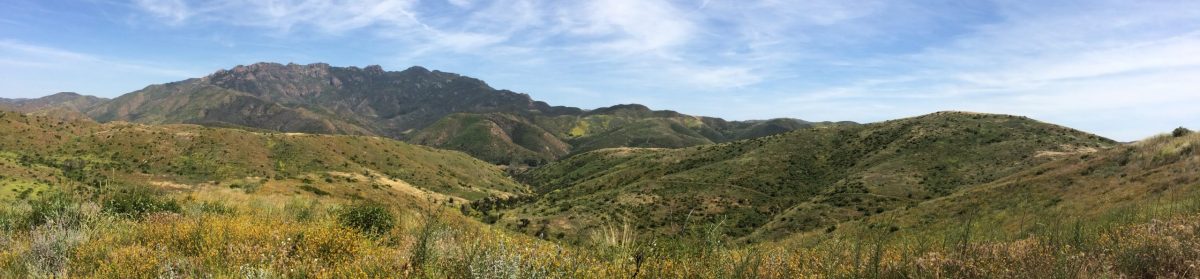
One of the blessings of hiking the Santa Monica Mountains (or San Gabriels, or Angeles Forest), or doing Task Force trail work, is the potential rare opportunity to encounter wildlife—real wildlife—in their habitat.
The 18,000-acre so-called “Big Wild”—stretching roughly from Brentwood and the Palisades up to dirt Mulholland Drive and across to the Valley – is filled with wild critters. Coyote and mule deer are mostly commonly seen, but I’ve encountered bobcats pursuing prey across the Westridge Fire Road. Once, I was running a trail near Temescal Ridge when a fairly large coyote popped out before me, weaving through the brush. Just before it disappeared, however, I glimpsed not a bushy tail but a tubular tail. That warn’t no coyote, ma’am—that was a lion. One of the most elusive denizens of the Big Wild.
Sometimes those critters come to us. Recently, there’s been a big uptick in residential sightings. I live in the hills of Brentwood’s Mandeville Canyon, right on the cusp of the urban-wildland interface. At four o’clock one morning, on a nearby street off Westridge Road, a neighbor’s Ring captured a mama bear and her three cubs strolling nonchalantly down the street, perhaps browsing the garbage cans on trash day. The video went viral, and was picked up by the L.A. Times and evening news. It seems mama had migrated from Topanga State Park in search of a new home. Apparently, “our” home, though of course, such critters lived here long before we came along.
Mountain lion sightings—and nocturnal Ring camera footage from people’s backyards and driveways—now abound. Sometimes they drink from pools, or seek out someone’s unlucky pet left outdoors. Multiple times on trail runs, I’ve encountered deer carcasses literally gutted (the lions’ favorite food). Lions are an apex predator, but their biggest enemy is automobiles encountered while crossing highways and freeways, as well as rat poisons that migrate up the food chain. The best known puma, P-22, lived in Griffith Park and was famously photographed in front of the Hollywood Sign.
The population of bears in California (black bears) has recovered over the past fifty-plus years, and they now bedevil careless tourists to Yosemite and Lake Tahoe. There is currently a legislative push to reintroduce grizzly bears, depicted on our state’s flag, in remote parts of the state.
The Annenberg Wildlife Crossing over the 101 freeway in Calabasas will facilitate migrations of various species, promoting desperately needed genetic diversity from animals in the Los Padres National Forest.
These big predators are rarely seen by most hikers. But there is one animal you need to keep your eyes peeled for: rattlesnakes. There’s a lot of them in the mountains right now, and they’re appearing earlier in the season than usual (probably because of the wet winter). I’ve seen several. There are more reports of snakebites, and not just one but two fatalities (in Orange and Ventura Counties), which are normally unheard of.
So if you’re out there, drinking in the wilderness, don’t plunge into thick brush. And always watch where you put your feet—and hands.
And enjoy the beauty of our precious mountains!
Eric Edmunds, Chair
Santa Monica Mountains Task Force